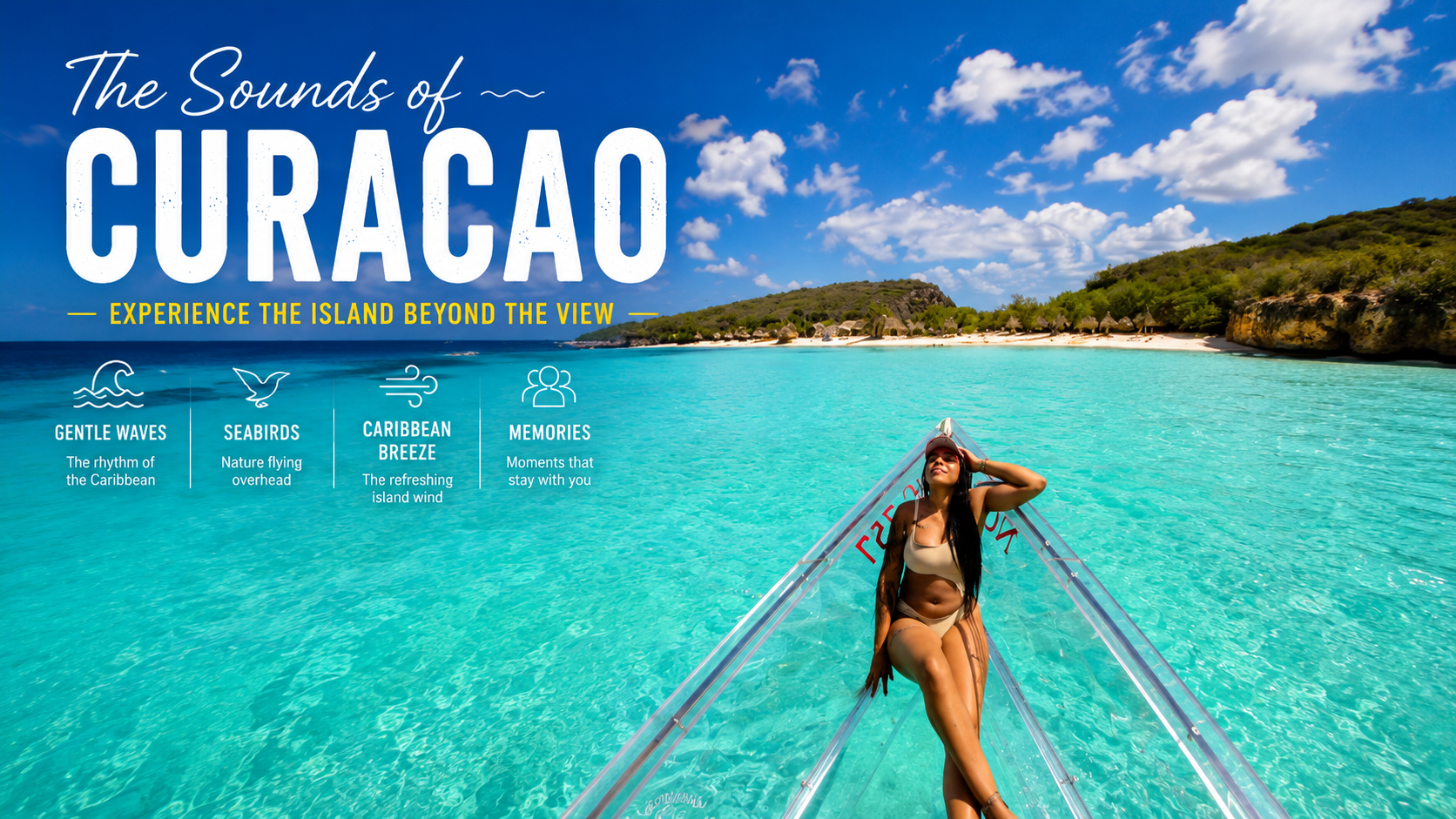

When you imagine Curaçao, you probably picture crystal-clear turquoise waters, vibrant coral reefs, and colorful pastel buildings in Willemstad. But there’s another dimension to this Caribbean paradise that most visitors never notice—the sounds. Curaçao isn’t just a feast for the eyes; it’s a symphony for the ears. From the gentle lapping of waves against the boat to the calls of tropical birds overhead, the island’s natural soundtrack creates an atmosphere that transports you far from the everyday world.
The Natural Sounds of Curaçao’s Coastline
If you’ve ever been on a Clearboat Curaçao tour, you know that the moment you leave the marina behind, the pace changes. The chatter of the city fades, replaced by something more elemental. This is the sound of Curaçao’s wild side, and it’s as much a part of the experience as the sights.
The Rhythm of the Sea
The most constant sound you’ll hear on any Curaçao boat tour is the sea itself. On calm mornings, the water laps gently against the hull in a soothing, rhythmic pattern that many find meditative. When winds pick up in the afternoon, you’ll hear the crash of waves against the northern coastline—a reminder of the ocean’s power and the island’s exposed position in the Caribbean.
These sounds aren’t just pleasant background noise. For marine biologists, the acoustic environment of the ocean is crucial. Sound travels farther and faster in water than in air, which means marine life uses acoustics to communicate, navigate, and find food. When you’re on a glass-bottom boat tour, you’re literally floating above one of the noisiest ecosystems on Earth—though most of the sounds are too low-frequency for human ears to detect.
Birds of the Curaçao Coast
Keep your eyes on the sky and your ears open, and you’ll notice Curaçao is home to a variety of coastal birds. Frigatebirds—with their massive 7-foot wingspans—circle overhead on thermal currents, their distinctive calls carrying across the water. Brown pelicans plunge-dive near the boat, creating dramatic splashes that announce their presence before you spot them. Laughing gulls and terns are constant companions, their calls mixing with the sound of the waves.
These birds aren’t just scenery—they’re indicators of a healthy ecosystem. The presence of fishing birds like pelicans and terns tells you the waters are rich with fish. The frigatebirds, which feed on squid and flying fish, indicate abundant marine life below the surface. So when you hear a frigatebird calling overhead during your Morning Escape Tour, you’re hearing proof that you’re in a thriving marine environment.
The Underwater Soundscape
Here’s something most visitors don’t realize: reefs are noisy places. Coral reefs generate a complex acoustic environment that scientists are only beginning to understand. Healthy reefs buzz with the sounds of snapping shrimp, grunting fish, and the scraping of parrotfish teeth against coral as they feed.
The “Crackling” of a Healthy Reef
If you were to submerge a hydrophone (an underwater microphone) near one of Curaçao’s reefs, you’d hear what marine biologists call the “reef soundscape”—a continuous crackling and popping sound. This comes primarily from snapping shrimp, which create cavitation bubbles with their claws to stun prey. These bubbles collapse with a loud pop, and when thousands of shrimp are doing this simultaneously, the result is a constant crackling sound.
Why does this matter? Because this acoustic environment is a sign of reef health. A vibrant, biodiverse reef generates a rich soundscape that attracts fish larvae, helps coral settle, and guides marine life to suitable habitats. So when your guide points out a healthy reef during your Midday Reef Tour, you’re looking at an ecosystem that’s not just visually spectacular—it’s acoustically alive.
Whale Calls (Seasonal)
During certain times of year, particularly from January through March, Curaçao’s waters host migrating humpback whales. These magnificent creatures are known for their complex songs, which can last for hours and travel hundreds of miles through the ocean. While you typically won’t hear whale songs from the surface, their presence is sometimes announced by the sound of their blows as they surface to breathe—a deep, resonant exhalation that’s both powerful and haunting.
Some lucky guests on private Clearboat charters have witnessed whales breaching or tail-slapping near the boat. The sound of a 40-ton whale’s tail hitting the water is something you feel in your chest as much as hear with your ears.
Human Sounds: The Cultural Soundscape
Curaçao’s sounds aren’t limited to the natural world. The island’s rich cultural heritage creates its own unique acoustic environment, one that reflects centuries of Dutch, African, Latin American, and Caribbean influences.
The Music of Curaçao
Walk through Willemstad’s historic center, and you might hear the sounds of tumba—the island’s signature music genre. With its African rhythms and European harmonies, tumba is the soundtrack of Curaçaoan celebrations, particularly during Carnival season. The genre is so central to the island’s identity that there’s an annual Tumba Festival where the “Rei di Tumba” (King of Tumba) is crowned.
You’ll also hear merengue, salsa, and other Caribbean genres drifting from restaurants and bars. Many venues feature live music, especially in the evenings, creating an atmosphere where the boundary between performers and audience blurs. If you’re on a Sunset Boat Trip, you might even have the chance to request your favorite Caribbean tunes from the captain.
Papiamentu: The Voice of the Island
One of the most distinctive sounds of Curaçao is the language itself. Papiamentu—a Creole language blending Portuguese, Dutch, Spanish, English, and African languages—is spoken throughout the island. Its melodic, rhythmic quality makes even casual conversations sound musical. When locals greet each other with “Bon dia” (good day) or “Kon ta bai?” (how are you?), you’re hearing a language that evolved from the island’s complex history.
Papiamentu isn’t just a way of communicating—it’s a cultural marker that connects Curaçaoans to their heritage. The language reflects the island’s position at the crossroads of European colonial powers, African slave trade, and Latin American influences. When you hear Papiamentu spoken around you, you’re hearing the living voice of Curaçao’s history.
How to Experience Curaçao’s Sounds on Your Visit
While the sounds of Curaçao are always present, you can enhance your experience by tuning in to them more intentionally. Here are some tips:
Choose the Right Tour
Different tours offer different soundscapes. Morning tours tend to be quieter, with more bird calls and the gentle sounds of calm water. Afternoon tours feature more wind and wave action, creating a more dynamic acoustic environment. Sunset tours often include music and a more festive atmosphere.
Listen Before You Look
When you first board the boat, take a moment to close your eyes and just listen. What sounds can you identify? The water against the hull? Bird calls? The wind? This simple exercise helps you tune into your environment and notice details you might otherwise miss.
Ask Your Guide
Our crew members are local experts who know Curaçao’s natural and cultural sounds intimately. Ask them about the birds you’re hearing, the history of the music playing, or the meaning behind Papiamentu phrases you hear around the island. Their knowledge adds depth to what might otherwise be background noise.
The Healing Power of Curaçao’s Sounds
There’s growing scientific evidence that natural sounds have therapeutic benefits. Studies show that listening to ocean waves can reduce stress, lower blood pressure, and improve sleep quality. Bird songs have been linked to improved mood and cognitive function. The simple act of being in a natural acoustic environment can help reset your nervous system after weeks or months of urban noise pollution.
Curaçao offers this therapeutic soundscape in abundance. Whether you’re on a glass-bottom boat tour, relaxing on a secluded beach, or simply walking through Willemstad, you’re immersed in sounds that your body and mind recognize as restorative. In a world dominated by traffic, construction, and digital notifications, Curaçao’s natural soundscape is a rare gift.
Ready to Hear Curaçao?
Most visitors come to Curaçao for the beaches, the snorkeling, and the colorful architecture. But those who take the time to listen discover a deeper layer of the island’s magic—the sounds that have accompanied this place for millennia. From the crackling of a healthy reef to the calls of frigatebirds overhead, from the rhythm of the Caribbean Sea to the melodies of Papiamentu, Curaçao’s soundscape is as rich as its visual landscape.
Experience the sounds of Curaçao for yourself. Browse our tour options and book your adventure today. Whether you’re listening for whale songs, bird calls, or the gentle lapping of turquoise waters, the island’s natural symphony is waiting to welcome you.
Frequently Asked Questions
Can I hear marine life during a glass-bottom boat tour?
While you won’t hear underwater sounds directly from the boat (water-to-air sound transmission is limited), our guides can describe the acoustic environment of the reef. During certain times of year, you might hear whale blows if humpbacks are in the area. The boat’s glass-bottom panels also allow you to see the marine life creating these sounds.
What’s the best time of day for bird watching from the boat?
Early morning is prime time for bird activity. Birds are most active in the hours after sunrise, making the Morning Escape Tour ideal for bird watching. You’ll see and hear more frigatebirds, pelicans, terns, and gulls in the morning than at other times.
Do tours include local music?
Some tours do, especially sunset trips and private charters. The captain can play Caribbean music, including tumba, merengue, and salsa. If you have specific music preferences, let us know when booking and we’ll accommodate you.
Is Curaçao noisy with other tourists?
Compared to some Caribbean destinations, Curaçao feels relatively uncrowded. Our Clearboat tours are limited to 14 passengers, ensuring an intimate experience without the noise of large tour groups. You’ll have plenty of space to enjoy the natural sounds of the island.
Can I hear Papiamentu spoken during tours?
Absolutely. Our crew speaks Papiamentu, Dutch, English, and often Spanish. You’ll hear them conversing in Papiamentu with each other and sometimes with locals we encounter. Our guides are happy to teach you basic phrases and explain the language’s fascinating history.